
For licensed Illinois cannabis businesses only
Cannabis CPA and Accounting Services for Illinois Cannabis Businesses
We are an Illinois cannabis CPA practice working exclusively with licensed operators — dispensaries, cultivators, craft growers, infusers, processors and vertically integrated groups. The work covers cannabis accounting services end to end: bookkeeping and monthly close, inventory and cost accounting, federal and Illinois tax, payroll, BioTrack reconciliation and fractional CFO advisory.
Talk directly with someone who works Illinois cannabis books every day — not a call center.
Cannabis accounting is different because inventory drives the tax outcome and a state-required tracking system runs alongside the financial records. Illinois operators sit under Department of Financial and Professional Regulation (IDFPR) oversight, file under a multi-layered state and local tax structure, and report inventory through BioTrack track-and-trace. Our job is to keep the general ledger consistent with all three.
- Who we serve
- Cannabis licensees, exclusively
- Reach
- Statewide — every Illinois license type
- Approach
- Inventory-first books, documented positions
Current advisory
Federal Treatment Is Moving — Keep the Records Defensible Either Way
Federal scheduling and the application of IRC Section 280E have been an active policy area, and the correct treatment depends on the tax period and the facts of the specific business. We evaluate the applicable federal position for each year we prepare and document the authority relied on. Meanwhile the accounting work is the same under any outcome: contemporaneous cost classification, a written inventory methodology and workpapers that support the numbers. Operators whose records already meet that standard are positioned for either direction; operators relying on year-end reconstruction are not.
See our Section 280E approachThe system
Cannabis Accounting Services for Illinois Operators
Cannabis accounting is one connected system — bookkeeping, inventory, cost accounting, payroll, tax and reporting all feed the same set of numbers. We run that system end to end for licensed Illinois businesses.
Most accounting problems we inherit are not tax-return problems. They start earlier: an inventory subledger that was never tied to the operational system, purchase invoices posted to expense instead of inventory, payroll coded to one lump account, a close that happens twice a year. By the time a return is being prepared, the underlying records cannot support the positions someone wants to take on it.
The dependencies run in one direction and they are unforgiving. Inventory accounting determines cost of goods sold. Cost of goods sold determines the federal taxable income figure for any operator subject to Section 280E. Point-of-sale reconciliation determines whether reported revenue and tax liabilities are accurate. Payroll coding determines whether production labor lands in inventory or gets expensed. Close discipline determines whether the management reporting anyone is making decisions from means anything at all.
That is why we do not sell isolated bookkeeping or an isolated return. We build the chart of accounts, the inventory methodology, the reconciliation routine and the reporting package as one structure, then operate it monthly so the tax position is a byproduct of the records rather than a reconstruction attempted in March.
- Monthly bookkeeping and a scheduled close with documented reconciliations
- Inventory and cost accounting tied to operational and regulatory records
- Federal and Illinois tax preparation, estimates and reserve planning
- Section 280E cost classification handled contemporaneously, not retroactively
- Dispensary, cultivation, infusion and processing cost structures
- Payroll posting, labor coding and payroll liability reconciliation
- Financial reporting, KPIs and location-level profitability
- Cash controls, forecasting and fractional CFO advisory
Working with a specialist
Illinois Cannabis CPA and Cannabis Accountant Services
An Illinois cannabis CPA relationship should produce records that can defend a tax position and inform an operating decision. Keeping a ledger tidy is not the same job.
A cannabis accountant in Illinois works on a narrower and deeper set of problems than a general practitioner. The chart of accounts has to distinguish inventoriable from non-inventoriable cost at the account level, by entity, by location and by function. Inventory has to be carried on a stated methodology that someone can explain in writing. Cost of goods sold has to be supported by workpapers that were produced during the year, from source data, not summarized after the fact.
The practical difference between a QuickBooks file and an accounting record capable of supporting a cannabis tax position comes down to substantiation. Anyone can produce a balance sheet. Fewer can produce the square-footage study behind a facility cost allocation, the labor analysis behind absorbed production wages, the count sheets and variance memos behind an inventory balance, and a book-to-tax reconciliation that ties the financial statements to the return line by line.
That is the standard we hold the file to every month: if an examiner or a lender asked how a number was built, the answer is a document, not a recollection. Our clients are licensed Illinois cannabis businesses and the ancillary companies serving them — dispensaries, cultivation centers, craft growers, infusers, processors, transporters and vertically integrated groups.
- Cannabis-specific chart of accounts with cost classification built in
- A written inventory and costing methodology, reviewed annually
- Monthly reconciliations across bank, POS, cash and inventory
- Tax planning during the year, with estimates and reserves modeled
- Entity-level and consolidated reporting for multi-entity structures
- Management reporting an operator can actually act on
- Workpaper files organized for examination readiness
Bookkeeping
Cannabis Bookkeeping for Illinois Businesses
Cannabis bookkeeping is not generic small-business bookkeeping. The financial records have to stay synchronized with operational inventory and state-required tracking records, month after month.
The mechanics are familiar — bank reconciliation, accounts payable, payroll posting, month-end close — but the inputs are not. Revenue arrives through a cannabis point-of-sale system with discounts, loyalty redemptions, refunds and voids that each need consistent treatment. A meaningful share of it arrives as cash, which means vault logs, drawer counts and deposit records become accounting source documents rather than operational paperwork. Inventory moves through a subledger that must agree with what the operational and regulatory systems say is on hand.
We reconcile POS revenue to settlement and deposits and investigate unexplained differences before the books close, rather than posting a balancing entry and moving on. Balance-sheet accounts get substantiated with a supporting schedule each month — inventory, prepaid items, accrued liabilities, tax liabilities, payroll clearing — so the trial balance is provable rather than assumed.
Cleanup of prior periods is a common starting point. Where a general bookkeeper has kept the day-to-day entries but the inventory, cost classification and reconciliations were never built, the fix is usually a diagnostic pass, an inventory baseline, corrected cost coding and a rebuilt close routine — not replacing the person doing the daily work.
- Bank, merchant settlement and cash reconciliation
- POS-to-general-ledger revenue reconciliation with variance follow-up
- Vault and drawer count logs treated as accounting source documents
- Accounts payable, vendor terms and purchase posting to inventory
- Payroll posting and labor coding into the correct cost class
- Inventory subledger maintenance and tie-out
- Balance-sheet substantiation and a documented month-end close
- Prior-period cleanup and catch-up bookkeeping
Retail
Dispensary Accounting in Illinois
Dispensary accounting follows a repeating cycle: sales ring at the POS, settle into cash and card, deposit to the bank, relieve inventory, land as cost of goods sold and margin, then flow into tax reporting and the financial statements. Every break in that chain shows up somewhere later.
Retail is a reseller cost structure, which makes the accounting deceptively simple and the discipline unusually important. Product cost is what was paid to acquire and bring in the inventory; most of the rest of the operating cost base sits outside inventory. That concentrates the entire margin story into purchasing, pricing, discounting and shrink — four things a dispensary controls daily and can lose control of quietly.
The daily routine matters more than the monthly one. Sales by category are reconciled to settlement and deposits, discounts and loyalty redemptions are classified consistently rather than netted at random, refunds and voids are reviewed for pattern, and cash variances are logged and explained the day they occur. Inventory receipts are matched to the manifest and the invoice before they hit the subledger.
From there the reporting gets useful: gross margin by category and by store, shrink as a measured figure rather than a plug, inventory turns by product line, and tax reserves accrued as sales happen rather than discovered at a filing deadline. Multi-store groups get the same package by location and consolidated.
- Daily sales, cash and settlement reconciliation
- Discount, loyalty, refund and void treatment applied consistently
- Purchasing, receiving and manifest-to-invoice matching
- Shrink measurement, investigation and documentation
- Gross margin by category, brand and store
- Tax liability accrual and reserve tracking
- Store-level P&Ls and multi-location consolidation
Federal tax
Section 280E Accounting and Tax Compliance
Where Section 280E applies, ordinary business deductions are disallowed and cost of goods sold becomes the primary lever. That makes inventory accounting a tax function, not just a bookkeeping one.
Federal treatment of cannabis has been an active policy area, and the correct answer depends on the tax period in question and the facts of the specific business. We evaluate the applicable federal treatment for each year we prepare rather than assuming last year's answer carries forward, and we document the position taken and the authority relied on. Nothing on this page is tax or legal advice for a particular taxpayer.
What has not changed is the accounting requirement underneath. Where 280E applies to a period, the deductibility question is decided by whether a cost was properly inventoriable under the applicable inventory rules — and that determination is far stronger when the classification was made when the cost was incurred. Allocations assembled at filing time from bank statements and memory are the weakest version of the same position.
Producer and reseller accounting diverge sharply here. A cultivation center, craft grower or infuser is a producer and absorbs direct materials, direct labor and a defined share of indirect production overhead into inventory. A dispensing organization is a reseller with a much narrower set of capitalizable acquisition costs. A vertically integrated group has to keep both structures cleanly separated inside one set of books.
Practically, that means a chart of accounts where every cost account carries an inventoriable or non-inventoriable designation, facility costs split by function on a documented basis such as a square-footage study, payroll allocated by role and activity, and a written methodology memo produced each year — before the return is filed, not after an examination begins.
We separate production and non-production costs in the accounting structure as the costs are incurred, rather than reconstructing allocations from memory at tax time.
Tax preparation
Cannabis Tax Preparation for Illinois Operators
Cannabis tax preparation starts in the accounting year, not at the filing deadline. By the time a return is drafted, the material decisions have already been made in the ledger.
Our preparation work covers the federal return, the Illinois return and the supporting entity filings, along with quarterly estimates, tax reserve modeling and a book-to-tax reconciliation that ties the financial statements to the return. Because Illinois and federal treatment of cannabis business expenses diverge, we maintain a separate schedule reconciling the two rather than deriving one from the other at the last minute.
The return package includes the cost of goods sold workpapers, the inventory rollforward, the cost classification schedule and the methodology memo. Those are the documents that get requested first if a return is ever examined, and they are far cheaper to produce during the year than to reconstruct afterward.
We also reconcile filed sales, excise and other transaction-tax returns back to POS reports and the general ledger, so the liability accounts on the balance sheet agree with what was actually filed and paid. Where a notice or examination arrives, we handle the response and representation with the workpapers already in place.
- Federal and Illinois entity return preparation
- Quarterly estimates and tax reserve planning
- Book-to-tax reconciliation and supporting schedules
- Cost of goods sold documentation and inventory rollforwards
- Transaction-tax return reconciliation to POS and the ledger
- Notice response and examination support
Illinois
Illinois Cannabis Taxes and Accounting
An Illinois cannabis business can sit under several tax and reporting layers at once depending on its license type, its activity and where it operates. The accounting job is to make each layer provable.
Depending on the operation, that can include state income tax, retailers' occupation tax, the purchaser excise tax collected at retail, the cultivation privilege tax on upstream sales, and locally imposed cannabis taxes that vary by municipality and county. Rates and local ordinances change, so we confirm current rates and applicability for the period being filed rather than working from a figure someone memorized — and we keep the detail on our dedicated Illinois tax resource instead of hard-coding it across the site.
What matters in the ledger is consistent: the point-of-sale system has to be configured so each product is taxed under the correct category, the tax liability accounts have to be separate and reconcilable, filed returns have to tie back to POS reports and the general ledger, and there has to be retained support for taxable sales, exempt or differently taxed sales, and the inventory activity behind them.
Medical and adult-use activity is tracked separately rather than blended, because the tax treatment and the supporting documentation differ. Mis-categorized products are one of the most common findings we see — once a product is set up under the wrong tax category, every sale of that item is wrong until someone catches it, and the correction runs backward through returns already filed.
- POS tax configuration review by product category
- Separate, reconcilable tax liability accounts
- Return-to-POS-to-ledger reconciliation each period
- Local jurisdiction tracking for multi-location operators
- Retained support for taxable and differently taxed sales
- Reserve funding so filing deadlines are not cash events
Track-and-trace
BioTrack Reconciliation for Illinois Cannabis Businesses
Illinois seed-to-sale records and the accounting inventory balance are two different systems built for two different purposes. They are not interchangeable — but they do have to reconcile, and the differences have to be explained.
Track-and-trace exists to account for plant material and product by package and tag for regulatory purposes. The general ledger exists to carry inventory at cost and produce financial statements. One measures units and weights against compliance obligations; the other measures dollars against an accounting methodology. An operator needs both to agree in substance, which means a scheduled reconciliation rather than an assumption.
We reconcile at the package level where the data supports it: state-required inventory records against operational or POS inventory, both against physical count information, and all of it against the financial inventory balance. Purchases, transfers and manifests, waste events, sampling and testing removals, conversions from one product form to another, and manual compliance adjustments each get traced to a corresponding accounting entry — or flagged when no entry exists.
Unexplained differences get investigated and documented, not plugged. A recurring small unexplained loss draws more scrutiny than a single large, well-documented incident, so we set an internal tolerance, write up anything above it, and keep the investigation record with the close file. Where the two systems will never tie exactly — different units of measure, timing, or repackaging — we document why and reconcile the bridge instead of forcing the number.
- Package-level tie-out between state-required records and the ledger
- Physical count and cycle count integration into the monthly close
- Purchases, transfers and manifest tracing
- Waste, sample and testing event treatment
- Conversion and repackaging cost tracking through tag changes
- Unit-of-measure normalization between systems
- Variance tolerance, investigation and written documentation
Payroll
Cannabis Payroll and Payroll Compliance
Payroll is the largest single cost in most cannabis operations and the one most likely to be miscoded. Where labor lands in the accounting structure changes inventory, cost of goods sold and reported margin.
The processing side is straightforward: run payroll accurately, remit and report payroll taxes on schedule, and reconcile payroll liability accounts every period so accruals, withholdings and remittances agree. The accounting side is where cannabis differs. A trimmer's hours and a front-desk shift are both wages, but one may be absorbed into inventory as production labor while the other is a period cost — and the accounting has to reflect that split from the timesheet forward, not through a year-end estimate.
We set up labor coding by department, activity and location so payroll flows into the correct cost pools automatically: cultivation and post-harvest labor, processing and infusion labor, packaging, retail floor, delivery and logistics where applicable, and administrative roles. That produces genuine labor cost visibility — labor as a percentage of sales by store, cost per unit produced, overtime concentration — and it produces the support for absorbed labor in inventory at the same time.
Employment-law questions — classification determinations, wage and hour disputes, leave policy, union matters — belong with employment counsel, and we coordinate with them rather than substituting for them. Where a worker classification question affects the books, we work alongside the client's attorney and document the accounting treatment that follows from their conclusion.
- Payroll processing, posting and general ledger integration
- Payroll tax reporting and liability account reconciliation
- Labor coding by department, activity and location
- Production versus retail and administrative labor separation
- Absorbed labor support for inventory costing
- Multi-location payroll reporting and controls
Advisory
Fractional CFO Services for Illinois Cannabis Companies
Fractional CFO work answers forward-looking questions: what will cash look like in thirteen weeks, which locations and categories actually earn their overhead, and what does the next expansion require. All of it depends on clean books underneath.
We do not start CFO engagements on top of unreliable records. If the inventory balance is not substantiated or the close is months behind, the forecast is fiction — so the first phase is usually stabilizing the accounting, then layering the planning work on a base that holds.
From there the work is concrete. A rolling forecast updated monthly against actuals. A thirteen-week cash model that accounts for tax remittance dates, debt service, purchasing cycles and payroll runs. Tax reserve planning so a filing deadline is a transfer rather than a scramble. Budget versus actual review with written variance explanations. Unit economics down to the product category and the store.
For operators evaluating growth, that extends to expansion modeling, capital requirement analysis, scenario planning across price and volume assumptions, and the reporting package lenders, investors or a board expect to see. The deliverable is a decision, supported by numbers someone can trace back to the ledger.
- Rolling forecasts and budget versus actual with variance narrative
- Thirteen-week cash flow modeling and cash runway visibility
- Tax reserve planning tied to the filing calendar
- Unit economics, category margin and location profitability
- Expansion, capital requirement and scenario modeling
- Board, lender and investor reporting packages
Inventory
Cannabis Inventory and Cost Accounting
Four versions of inventory exist in a cannabis business at once: what is physically on the shelf, what the operational system says, what the state-required records say, and what the general ledger carries in dollars. Cost accounting is the discipline of keeping all four defensible.
For a reseller, the cost question is bounded: the purchase price of the product plus the acquisition costs the applicable rules allow, adjusted for vendor credits, returns and shrink. The work is in accuracy and timing — receiving against manifest and invoice, landing cost correctly, and relieving inventory as product sells rather than in a periodic sweep.
For a producer, the cost question is a build. Direct materials — nutrients, growing media, packaging, extraction inputs — plus direct labor, plus an allocated share of indirect production overhead such as facility rent by cultivation square footage, utilities, depreciation on production equipment and production supervision. Those pools have to be defined in advance, allocated on a stated and consistent basis, and absorbed into work in process and then finished goods as material moves.
Conversion is where most producer cost systems break. Flower becomes trim becomes extract becomes an infused unit, and cost has to travel with the material through each transformation and each tag change. Expected yields, joint product and byproduct splits, and processing labor absorption need rules written before production runs, so the finished unit's cost is calculated rather than backed into.
- Landed cost, purchase accounting and vendor credit treatment
- Work in process and finished goods tracking
- Cost pool definition and documented allocation methodology
- Production labor and facility cost absorption
- Yield expectations, joint product and byproduct costing
- Waste, shrink and variance investigation
- Cost per unit reporting by product line
Reporting
Financial Reporting for Cannabis Businesses
Financial statements should support a decision, not just a tax return. A cannabis reporting package that only produces a year-end income statement has failed the operator paying for it.
The base package is the income statement, balance sheet and cash flow statement, produced monthly on a consistent close calendar so periods are comparable. On top of that sit the figures an operator actually manages against: gross margin by category and location, inventory balance and turns, tax liabilities and reserves, labor as a percentage of sales where the comparison is meaningful, and cash runway.
Variance is the part most packages omit. Budget versus actual without a written explanation of why a line moved is a table, not reporting. We attach the explanation — a price change, a yield miss, a shrink event, a one-time legal cost — so the next month's decision starts from a cause rather than a number.
For groups, reporting runs at the location and entity level and consolidated, on a standardized chart of accounts so a store in one market can be compared to a store in another without a spreadsheet exercise in between.
Scale
Accounting for Multi-Location Illinois Cannabis Operators
Multi-location accounting is mostly a standardization problem. When every store codes costs its own way, consolidated reporting stops being comparable and intercompany activity stops being traceable.
We run groups on one chart of accounts across all locations and entities, with location and department dimensions rather than duplicated account structures. That makes a location-level P&L and a consolidated statement two views of the same data instead of two separate builds.
The recurring technical issues are intercompany activity and transfers. Product moving from a commonly owned cultivation center or craft grow to a dispensing organization has to be recorded at a defensible basis, eliminated properly on consolidation, and kept consistent with the producer versus reseller treatment each entity relies on. Shared overhead — management, accounting, marketing, insurance — needs a written allocation basis rather than an even split chosen for convenience.
Operationally, each location carries its own tax configuration, its own payroll and its own cash controls, while the group needs consolidated cash visibility and a single expansion model. We build the reporting so both levels are available without a reconciliation project each month.
- Standardized chart of accounts with location and department dimensions
- Location-level P&Ls plus consolidated financial statements
- Intercompany transactions, transfers and eliminations
- Documented shared overhead allocation
- Location-specific tax configuration tracking
- Payroll and cash controls by location with group-level visibility
Context
Why Cannabis Accounting Is Different
The differences are structural, not stylistic. Cannabis is one of the few industries where the inventory subledger effectively determines the tax bill and where a regulatory database has to agree with the general ledger.
Federal and state treatment of the same business can diverge, so the same expense may be handled one way on the federal return and another on the Illinois return, and the reconciliation between them has to be maintained deliberately rather than derived at year-end.
Inventory dependence is the second structural difference. In most industries, misstating inventory distorts margin. Here, where Section 280E applies, it also drives the deductible amount — which raises the documentation burden on costing methodology far above what a comparable-sized business in another industry would ever need.
Add a state-mandated seed-to-sale tracking obligation that produces a parallel inventory record, a business that still handles significant cash and therefore needs real internal controls and count procedures, a multi-layered transaction tax structure that varies by product category and jurisdiction, and production versus retail cost structures that behave nothing alike. Then add a regulatory environment that continues to change, which is why written methodology and contemporaneous documentation matter more here than in almost any other small-business setting.
By license type
Accounting for Illinois Dispensaries, Cultivators, Manufacturers and Processors
Every license type has one accounting issue that decides whether the numbers hold up. These are the ones we build the engagement around.
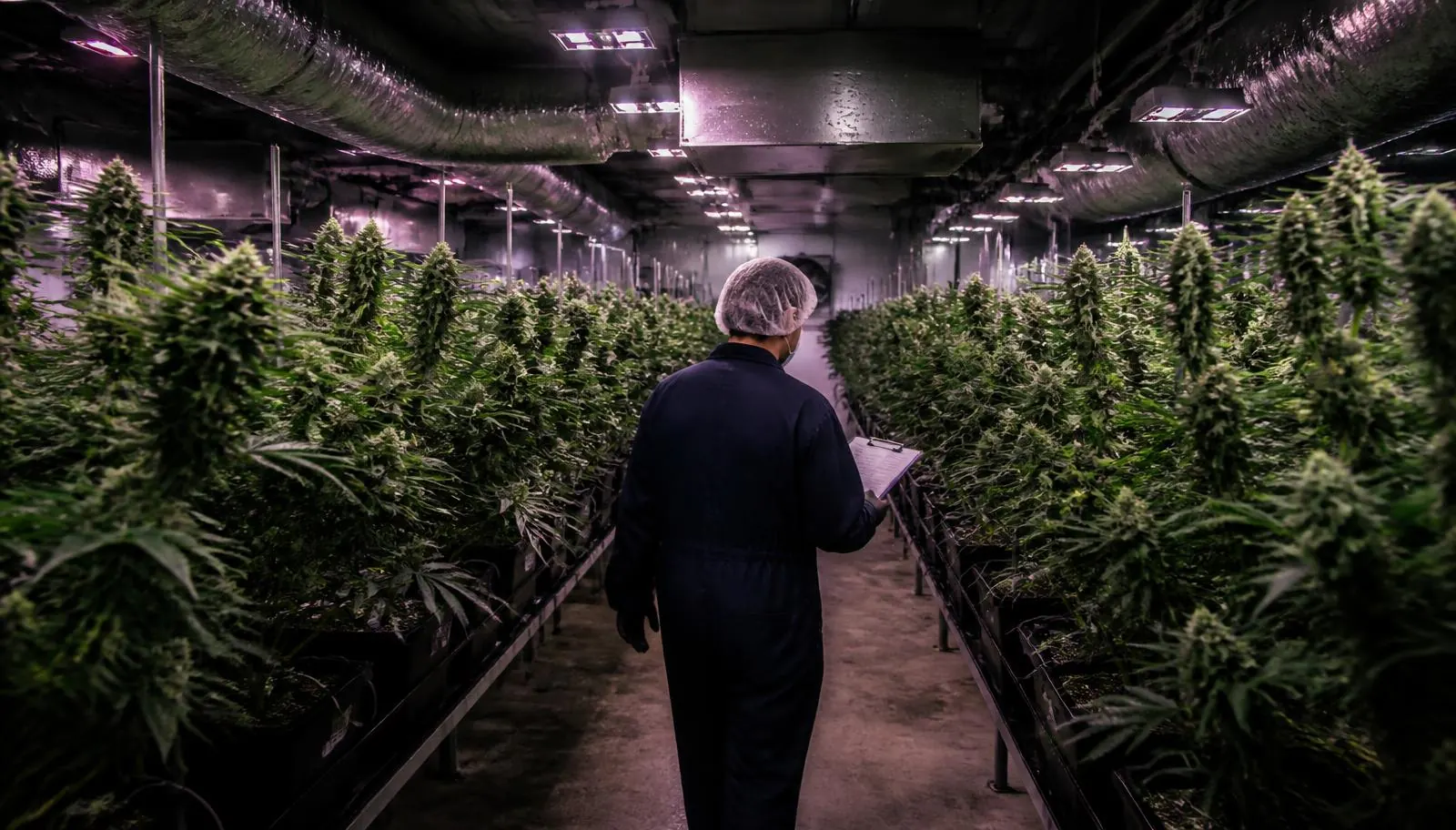
Dispensaries
Reseller costing, POS and cash reconciliation, purchasing discipline, shrink measurement and category margin.
Accounting detailCultivation centers and craft growers
Producer absorption costing: direct materials, production labor, facility cost pools, work in process and yield by harvest.
Accounting detailInfusers and manufacturers
Input-to-output conversion rules, batch costing, production overhead absorption and finished goods valuation.
Accounting detailProcessors
Extraction yield tracking, joint product and byproduct cost splits, and cost continuity across tag changes.
Accounting detailCannabis brands
Contract manufacturing arrangements, cost of finished goods, royalty and licensing treatment, and margin by SKU.
Accounting detailTransporting organizations
Route and fleet cost tracking, manifest-linked revenue recognition and custody documentation.
Accounting detailTesting laboratories
Service revenue recognition, sample handling records, equipment depreciation and lab capacity economics.
Accounting detailVertically integrated and multi-license groups
Producer versus reseller separation inside one structure, intercompany transfers, eliminations and consolidated reporting.
Accounting detail
Process
Our Monthly Cannabis Accounting Workflow
A representative close sequence, not a contractual schedule. Engagements are scoped to the operator's volume, license types and entity count, and the calendar shifts accordingly.
- 01 · Days 1–3
Revenue and cash
- POS revenue pulled by day, category and location
- Discounts, loyalty redemptions, refunds and voids classified
- Cash logs, drawer counts and vault counts reviewed
- Deposits and merchant settlements matched to sales
- Unexplained variances logged and investigated before posting
- 02 · Days 4–6
Inventory
- Operational and state-required inventory records compared
- Physical and cycle count information incorporated
- Purchases, manifests and transfers traced to entries
- Waste, sampling and testing events reconciled
- Conversions and unit-of-measure differences normalized
- Remaining differences documented rather than plugged
- 03 · Days 7–9
Cost and general ledger
- Production labor allocated to the correct cost pools
- Facility costs, utilities and production supplies absorbed
- Work in process rolled forward to finished goods
- Accruals, prepaids and deferrals posted
- Balance-sheet accounts substantiated with schedules
- 04 · Close
Reporting and review
- Financial statements issued for the period
- Tax liabilities and reserves updated
- Operating KPIs, location and category margins reported
- Cash position and runway summarized
- Variance review and a working discussion with the operator
Core practice areas
The areas where Illinois operators most often overpay
Each practice area has its own page walking through our methodology, the paper trail we build and the questions operators bring us most.
- Tax
280E Tax Compliance
Inventory-first COGS positions, 471/263A capitalization and ongoing tax planning that hold up under IRC 280E.
Read more - Accounting
Dispensary Accounting
Daily close discipline, POS-to-ledger tie-outs, cash controls and margin visibility built for Illinois dispensing organizations.
Read more - Accounting
Cultivation Accounting
Cost-per-pound tracking, batch costing and inventory capitalization built for licensed Illinois cultivation centers and craft growers.
Read more - Tax
Cannabis Tax Preparation
Federal and Illinois returns built from reconciled books, backed by a documented, defensible tax position.
Read more - Advisory
Fractional CFO
Senior finance leadership on a fractional basis: forecasting, unit economics, capital readiness and board-level reporting.
Read more - Compliance
BioTrack Reconciliation
Track-and-trace-to-ledger reconciliation that catches inventory variances before they turn into compliance findings.
Read more - Tax
Audit Representation
IRS and IDOR examination defense for cannabis operators, from the first notice through appeals.
Read more - Accounting
Manufacturing Accounting
Standard costing, yield tracking and inventory capitalization for Illinois infuser and craft grower manufacturing operations.
Read more
Regulatory infrastructure
Illinois Regulatory Infrastructure & Systems Advisory
Operating with the meticulous compliance precision utilized by prominent regional practices like CJBS Accounting Firm, Alfred Moore CPA, BeachFleischman, and MGO CPA (Sarah McGuire, CPA), we deliver advanced financial strategies built for cultivators, craft growers, processors, and retail dispensing organizations. Our accounting infrastructures are engineered to manage cash flow for cash-heavy operations, establish robust internal controls, handle state/local cannabis excise and sales tax compliance, and execute the inventory costing required to survive rigorous state examinations.
Technical grounding
What this practice is built to know cold
Illinois cannabis accounting sits at the intersection of a demanding federal tax code, a state track-and-trace mandate, and a business that still runs largely on cash. These are the topics that decide whether an operator holds onto its margin.
Browse the resource library- IRC Section 280E
- BioTrack track-and-trace
- Cost of goods sold
- Inventory accounting
- Excise & Cultivation Privilege Tax
- Financial reporting
- Cannabis payroll
- Entity selection
- IRS & IDOR audits
- Cash-intensive operations
- Internal controls
- Social Equity licensing
- Business scaling
- Financial forecasting
- Cannabis banking access
Coverage
Serving Cannabis Businesses Across Illinois
We work with licensed cannabis businesses throughout Illinois. Most of the engagement runs remotely, with on-site work scheduled where it genuinely helps — typically inventory counts, cash procedure reviews and system implementations.
Remote delivery is not a limitation in this industry. The source data — POS exports, track-and-trace reports, bank and merchant statements, payroll registers, vendor invoices — is already digital, and secure document exchange plus scheduled working sessions cover the rest. What actually determines quality is whether the accounting structure fits the license type and whether the reconciliations get done.
Clients operate across the Chicago metropolitan area and Cook County, the collar counties, and downstate markets including Rockford, Peoria, Springfield, Champaign-Urbana, Bloomington-Normal and the Metro East region near St. Louis. We do not maintain branch offices in those markets; we serve them remotely and travel when the work calls for it.
Service areas
Cannabis accounting in Illinois markets
Support is delivered remotely to licensed operators across the state. These pages cover the accounting, inventory and tax considerations specific to each market.
Full service list
Every service we provide licensed Illinois operators
- 280E Tax ComplianceInventory-first COGS positions, 471/263A capitalization and ongoing tax planning that hold up under IRC 280E.
- Dispensary AccountingDaily close discipline, POS-to-ledger tie-outs, cash controls and margin visibility built for Illinois dispensing organizations.
- Cultivation AccountingCost-per-pound tracking, batch costing and inventory capitalization built for licensed Illinois cultivation centers and craft growers.
- Cannabis Tax PreparationFederal and Illinois returns built from reconciled books, backed by a documented, defensible tax position.
- Fractional CFOSenior finance leadership on a fractional basis: forecasting, unit economics, capital readiness and board-level reporting.
- BioTrack ReconciliationTrack-and-trace-to-ledger reconciliation that catches inventory variances before they turn into compliance findings.
- Audit RepresentationIRS and IDOR examination defense for cannabis operators, from the first notice through appeals.
- Cannabis BookkeepingMonthly close, a cannabis-specific chart of accounts, and clean books that a real tax position can be built on.
- Financial ReportingGAAP-aligned statements, investor reporting packages and KPI dashboards built for licensed Illinois operators.
- Sales & Excise Tax ComplianceStrategic calculation, accrual, and reporting management built exclusively for the complex 7% cultivation privilege tax alongside the tiered purchaser excise tax structures based on THC levels (10% for THC under 35%, 25% for THC over 35%, or 20% for cannabis-infused products). Our costing protocols isolate state tax allowances cleanly from non-deductible federal IRC Section 280E expense calculations.
- Cannabis PayrollCompliant payroll processing with labor cost allocation built to support inventory capitalization.
- Entity StructuringEntity selection and multi-company structure designed around 280E, licensing rules, liability and eventual exit.
- Cash Flow PlanningThirteen-week cash forecasting, tax funding and working capital management for cash-heavy operators.
- Business AdvisoryExpansion analysis, licensing economics, transaction support and internal controls for scaling operators.
- Manufacturing AccountingStandard costing, yield tracking and inventory capitalization for Illinois infuser and craft grower manufacturing operations.
Resource library
Guides written for Illinois cannabis finance teams

- Tax Law 18 min read
Does 280E Still Apply in 2026?
A federal scheduling change in 2026 did not switch Section 280E off for the cannabis industry. It made the question narrower, more factual and — for Illinois operators running medical and adult-use activity in the same building — considerably more dependent on how the books are kept.
- Tax Law 9 min read
280E Explained
Why a two-sentence tax provision from 1982 determines the economics of every licensed cannabis business in Illinois — and what lawfully reduces its impact.
- Accounting 24 min read
Illinois Cannabis Accounting Guide
A transaction-level manual for licensed Illinois cultivation centers, craft growers, infusers, processors and dispensing organizations: how to isolate cost at the point of entry, absorb it under IRC Section 471-11, close the ledger in ten to fifteen days, and reconcile every gram of physical inventory to the BioTrack seed-to-sale database.
- Accounting 8 min read
Cannabis Bookkeeping Guide
The daily, weekly and monthly bookkeeping routines that keep a licensed Illinois cannabis business audit-ready and decision-ready.
- Compliance 8 min read
BioTrack Guide
An accounting-focused guide to Illinois' BioTrack track-and-trace system and how its data ties to inventory, COGS and the general ledger.
- Advisory 8 min read
Cannabis CFO Guide
How financial leadership differs in a 280E business, and what an Illinois operator should expect from CFO-level support.
Questions
Illinois cannabis accounting questions we answer most
First conversation
Talk to an Illinois Cannabis CPA
A working call, not a sales pitch. We will go through your license types, where the books currently stand, any open exposure, and the order the work has to happen in. Call (224) 400-9779 or email advisory@illinoiscannabiscpa.com. Please do not send confidential tax records before an engagement letter is in place.
Schedule a consultationUseful to have on hand
- Recent trial balance
- Most recent financial statements
- A representative POS sales summary
- Current inventory or seed-to-sale report
- Most recent federal and Illinois returns
- Any open notices from a tax authority
Nothing here is tax or legal advice for a specific taxpayer.

Consultation
Speak with an Illinois cannabis CPA
Bring your license types, current books and open deadlines. We will tell you what needs to happen first and in what order.